Category Archives: Archive by Type

Aluminium Tectonics-Final Presentation-Alvin Amito
At the final presentation, we peeled of the covering from the aluminium. The results were good, and the party from Ash and Lacy was pleased with the simple idea that was, from a business side very appealing, as all the
Aluminium Tectonics-Final Presentation-Alvin Amito
At the final presentation, we peeled of the covering from the aluminium. The results were good, and the party from Ash and Lacy was pleased with the simple idea that was, from a business side very appealing, as all the
Aluminium Tectonics-Final Model-Alvin Amito
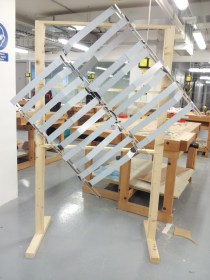
For the final model we chose the scale 1:2 instead of 1:1 because it allowed us to be able to show more of the screen inside the 1:1 frame and how it worked, rather than the full scale model. This
Aluminium Tectonics-Final Model-Alvin Amito
For the final model we chose the scale 1:2 instead of 1:1 because it allowed us to be able to show more of the screen inside the 1:1 frame and how it worked, rather than the full scale model. This
Aluminium Tectonics-Test scale model-Alvin Amito
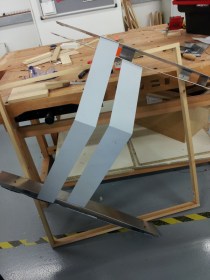
After creating the mock ups, we made a 1:10 scale model to test out the scheme and the Aluminium. This was an interesting and extremely useful experience as several issues were highlighted such as the type of connections we should
Aluminium Tectonics-Test scale model-Alvin Amito
After creating the mock ups, we made a 1:10 scale model to test out the scheme and the Aluminium. This was an interesting and extremely useful experience as several issues were highlighted such as the type of connections we should

Aluminium Tectonics-Second workshop session-Alvin Amito
At the second workshop session we came up with more solid ideas that were based on the themes of music and motion, incorporating elements from the musical instrument, the piano. We decided on creating a screen that resembled a piano
Aluminium Tectonics-Second workshop session-Alvin Amito
At the second workshop session we came up with more solid ideas that were based on the themes of music and motion, incorporating elements from the musical instrument, the piano. We decided on creating a screen that resembled a piano
Ash & Lacy study visit
Presentation of our study visit at Ash & Lacy. Our group looked in particular at the CNC cutting process, as well as the more technical process of preparing files and handling the aluminium sheets on the CNC bed. Razvan Pop
Ash & Lacy study visit
Presentation of our study visit at Ash & Lacy. Our group looked in particular at the CNC cutting process, as well as the more technical process of preparing files and handling the aluminium sheets on the CNC bed. Razvan Pop
Design Development
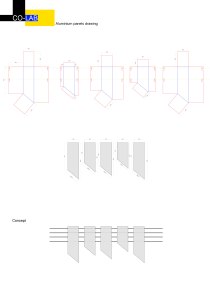
This week we have presented our proposal of the entrance screen for the new Birmingham Conservatoire. After measuring the opening from a facade elevation provided by the architects of the new building we have decided to create a 1:2 scale model
Design Development
This week we have presented our proposal of the entrance screen for the new Birmingham Conservatoire. After measuring the opening from a facade elevation provided by the architects of the new building we have decided to create a 1:2 scale model
Aluminium Tectonics-Alvin Amito
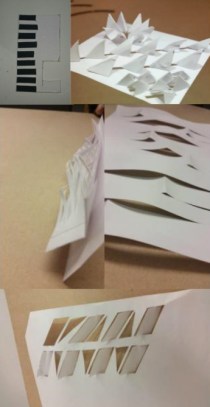
First week of Workshop sessions. We racked our brains for ideas on how we could clad the Conservatoire building and we came up with these initial models. We focused on the subject of music and movement so that we could
Aluminium Tectonics-Alvin Amito
First week of Workshop sessions. We racked our brains for ideas on how we could clad the Conservatoire building and we came up with these initial models. We focused on the subject of music and movement so that we could
Aluminium Tectonics-Alvin Amito
After observing the complete Ash and Lacy production processes, we were split into groups and produced a presentation focusing on one of the areas, using a range of media and also producing a draft of a response to the next part of
Aluminium Tectonics-Alvin Amito
After observing the complete Ash and Lacy production processes, we were split into groups and produced a presentation focusing on one of the areas, using a range of media and also producing a draft of a response to the next part of
Aluminium Tectonics-Alvin Amito
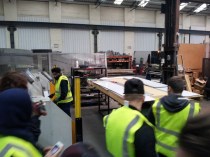
Our first site visit to Ash & Lacy as an introduction into part 1 of the project, comprising of a presentation into the companies history and current ventures, followed by a general tour of the production sequence involved.
Aluminium Tectonics-Alvin Amito
Our first site visit to Ash & Lacy as an introduction into part 1 of the project, comprising of a presentation into the companies history and current ventures, followed by a general tour of the production sequence involved.

Aluminium Tectonics – Emraan Mayow
ASH & LACY TIMELINE 1857 – Formed First Company – Joseph Ash. 1864 – Joined with John Pierce Lacy to form Ash & Lacy. 1970 – Ash & Lacy Steel Products Formed. 1975 – Floclad Added to Product Range. 1984 – Flospan Buildings Developed and Launched/Dekex Fully Sealed Roof
Aluminium Tectonics – Emraan Mayow
ASH & LACY TIMELINE 1857 – Formed First Company – Joseph Ash. 1864 – Joined with John Pierce Lacy to form Ash & Lacy. 1970 – Ash & Lacy Steel Products Formed. 1975 – Floclad Added to Product Range. 1984 – Flospan Buildings Developed and Launched/Dekex Fully Sealed Roof
Aluminium Tectonics – Benjamin James
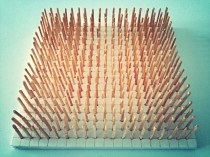
Finally, the ‘cross louvre’ design for our solar shading system is complete. It has developed through all stages with initial designs being inspired by the simple experience of walking through a wood. The experience led to the idea of manipulating
Aluminium Tectonics – Benjamin James
Finally, the ‘cross louvre’ design for our solar shading system is complete. It has developed through all stages with initial designs being inspired by the simple experience of walking through a wood. The experience led to the idea of manipulating
Aluminium techtonics – Final product – Stanley Fu
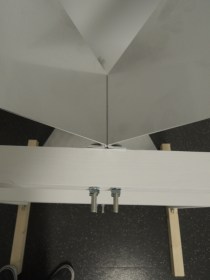
After many tests with cardboard and aluminium, the final produce was ready to be made. A 4x4cm wooden frame was used to support the cladding system which would be build at a scale of 1:2. We built the model high
Aluminium techtonics – Final product – Stanley Fu
After many tests with cardboard and aluminium, the final produce was ready to be made. A 4x4cm wooden frame was used to support the cladding system which would be build at a scale of 1:2. We built the model high
Aluminium Tectonics – Kimran Farooq
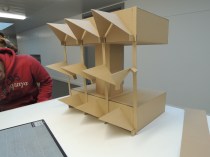
Our light studies show that designs 2 and 3 work most effectively as they reduce the amount of light reflecting from the facade; they reduce the amount of light entering through the windows and they don’t completely block the view
Aluminium Tectonics – Kimran Farooq
Our light studies show that designs 2 and 3 work most effectively as they reduce the amount of light reflecting from the facade; they reduce the amount of light entering through the windows and they don’t completely block the view

 \\
\\ 
You must be logged in to post a comment.